Center Stage: Theater as a Safe Haven for Our Community Family
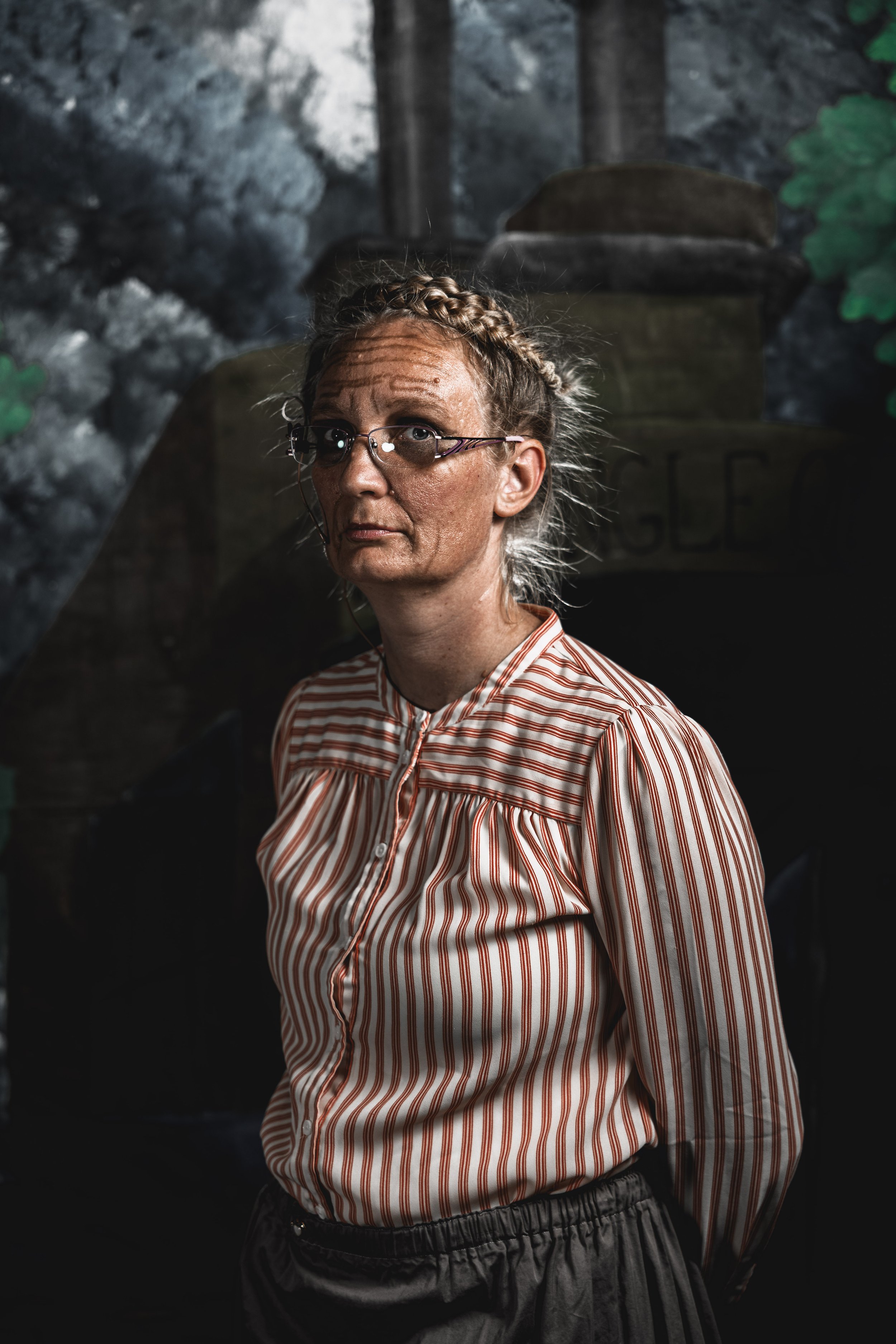
Sarah Chaston starring in Murder Aboard the SS Jungle Queen (photo: Hans Creative Studios).
There is a distinct kind of magic that happens in community theater long before the stage lights turn on or the set pieces are bolted into place. It’s found in the quiet, foundational moments: a family reviewing materials at home, old friends practicing harmonies in a living room, and local performers preparing to step into a brand-new production cycle.
For local performance veteran Sarah Chaston, the stage has long served as a natural extension of a life steeped in music. From elementary school plays and college opera classes to her current roles conducting and serving on the board of the Maricopa Chorus, Sarah's vocal and dramatic presence is well-known to local audiences. Theatergoers will remember her comedic turn alongside Christina Smalley as the eccentric aunts, Spiker and Sponge, in a past local community production of James and the Giant Peach. More recently, she commanded the Broadway Maricopa stage in Murder Aboard the SS Jungle Queen, playing half of a seemingly frail, elderly couple who spent the show using a wheelchair to hide the fact that they were actually—(spoiler alert!)—the production's mastermind villains.
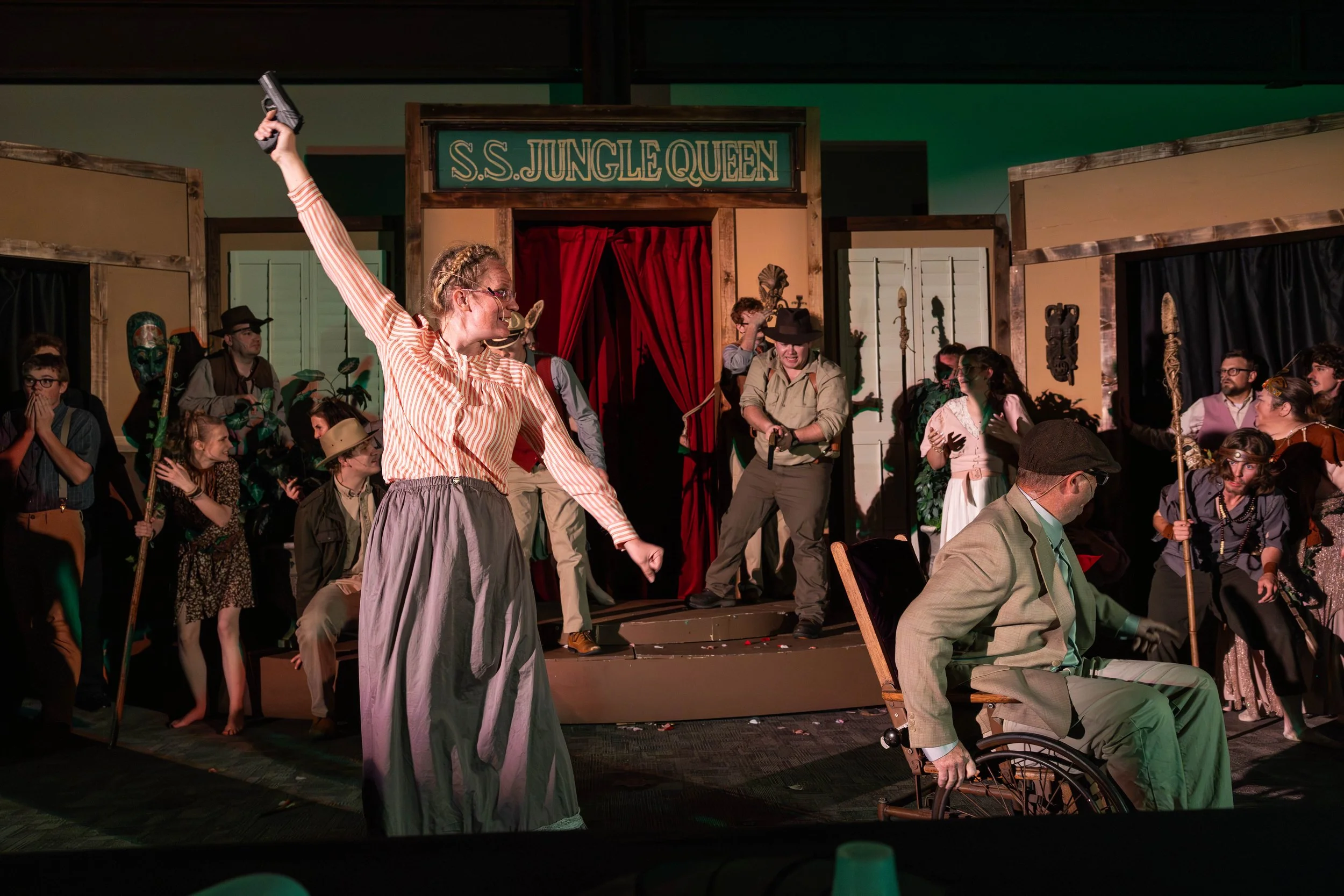
(photo: Hans Creative Studios)
This summer, however, Sarah is shifting gears from those specific, chaotic character roles to a production that has become a complete family collective. Her husband, Steven, landed the role of the Ozian Guard; her two oldest children, Wendy and Walter, are joining the cast as Munchkins; and Sarah herself is multi-tracking as an Ozian ensemble member and a Tree Muse. With two younger children at home who are still a bit too young to audition, the production has truly captured the household. But for the Chaston family, theater is more than just a creative outlet—it provides an organic, structured environment where young performers can safely explore personal growth, responsibility, and community connection.
A Family Collective and the Rehearsal Runway
With full ensemble rehearsals for Broadway Maricopa's upcoming production of The Wizard of Oz slated to begin next week, the Chaston household is currently channeling their early energy into independent preparation at home. While Steven has already stepped into his first principal rehearsal as the Ozian Guard, the rest of the family is using this quiet week on the runway to tackle their own unique "homework."
For Sarah, the decision to dive into this massive production was driven entirely by her kids, who are completely obsessed with the world of Oz. Knowing how much it meant to them, she wanted to do everything possible to ensure their first big show together was a success.
"Wendy and Walter are absolutely obsessed with it. So I wanted to do what I could to make sure that their show was a success."
Because the kids are so deeply invested, their creative imaginations naturally ran wild before auditions—meaning Sarah’s first parenting task was managing some big casting expectations. When Wendy and Walter learned they would be stepping into Munchkinland rather than landing roles as Ozians or Flying Monkeys, Sarah took a grounded, matter-of-fact approach to help them process the news. She emphasizes the importance of helping her kids find pride and purpose in their assigned roles, teaching them early on that every part of a 70+ person cast matters to the final production.
While the kids ground themselves in their preparation, Sarah is tackling her own musical homework by running early three-part harmony tracks with her long-time onstage partner, Christina Smalley. She notes with a laugh that their early independent run-throughs are still a work in progress, joking that when their unique vocal tones mix without the rest of the cast, they accidentally sound a bit more like witches than trees. It is exactly that type of collaborative, lighthearted problem-solving that turns early rehearsals into fun, memorable milestones.
The Predictive Safety of the Script
This balance of practice, structure, and real-world engagement is a core theme in the Chaston household, where digital screens take a backseat to active creating. Sarah intentionally keeps her children engaged with books, theater, and live performances, prioritizing environments where they can actively build something real for an audience rather than simply consuming digital entertainment.
Sarah brings this same dedication to structured learning to her professional life. For the past five years, she has operated a local micro-school that specializes in working with neurodivergent students, helping them learn how to self-motivate, break down goals, and communicate outside of rigid grade-level comparisons. Her background as an educator and a mother deepens her perspective on why the performing arts are a unique space where individuals can truly find their footing and thrive.
"When you are in theater, you are fed exactly what lines to say, and you know what lines are going to be said back. It provides a safe socializing environment."
As Sarah explains, everyday communication can often lack a clear, predictable pattern for neurodivergent individuals, making it difficult to read the natural back-and-forth of human emotions and expressions. Theater completely changes that equation by removing those unpredictable conversational variables.
"When you are in theater, you are fed exactly what lines to say, and you know what lines are going to be said back," Sarah shares. "And you get to practice the emotions that go with it, and what your face looks like, over and over and over again."
By replacing social uncertainty with a predefined script, the stage gives performers a secure, repeatable framework to practice interaction. For many individuals, these clear boundaries actually alleviate the pressure of large social gatherings. Because the parameters of the stage are entirely predefined, actors know exactly who is going to speak and when, providing a safe, low-stress socializing environment that Sarah has championed for her children from a very young age.
Respecting the Craft—and the Clock
As an educator currently preparing to teach advanced high school courses like chemistry, physics, and calculus, Sarah operates on a tight schedule. The logistical efficiency behind Broadway Maricopa is an operational detail she deeply appreciates, noting how much she values a director who respects the actors' personal lives rather than treating their time as an afterthought.
"I really appreciate that the director of Broadway Maricopa takes the time to make sure that what we're performing is appropriate for a wide variety of audiences," Sarah notes. "And two, I appreciate that he doesn't make us come to rehearsals that we don't need to be at."
For a busy family, this organizational respect prevents rehearsal burnout. Sarah points out that instead of forcing the entire cast to sit through a grueling three-hour block just to run five minutes of lines—a common "time sink" in community theater—the scheduling here lets actors know exactly when they are needed.
With a massive cast of over 70 local performers, managing that logistical timeline is a complex task—but it is exactly what allows multi-generational families like the Chastons to participate together seamlessly. As the countdown to full ensemble rehearsals continues, their structured preparation is paving a beautiful path down the Yellow Brick Road.
Tickets for Broadway Maricopa’s upcoming summer production of The Wizard of Oz officially go on sale this June. Keep a close eye on our official website and social media channels to secure your seats the moment the box office opens!